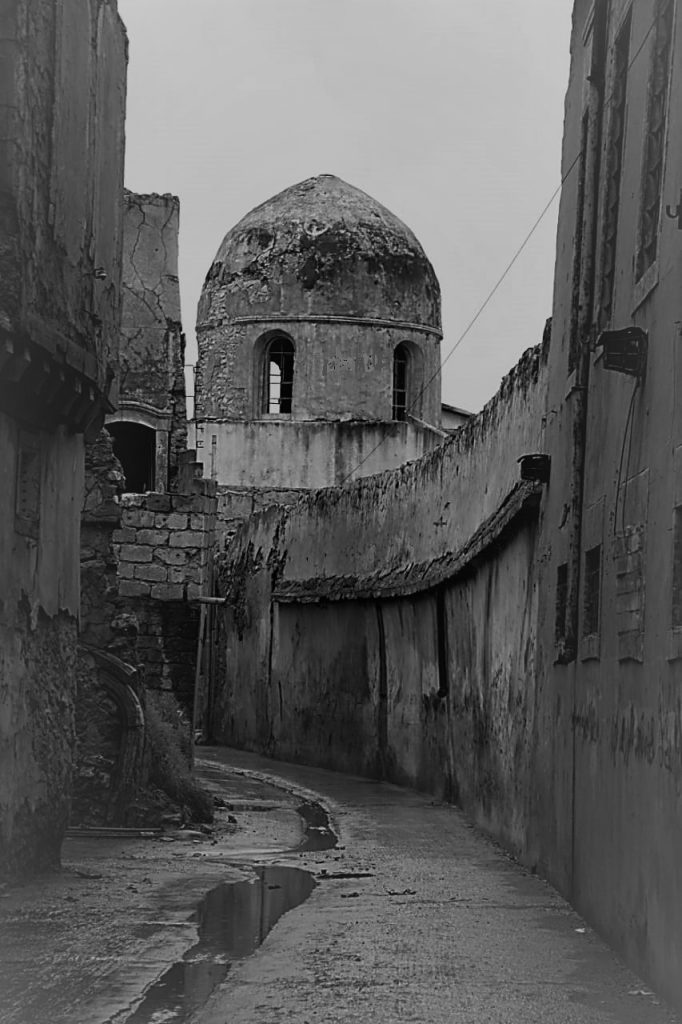
In the course of about a decade, Mosul witnessed the assassination of some 82 journalists and media employees, not including the ones that disappeared at the hands of ISIS. “All cases of targeting and assassinating journalists in Nineveh until 2014 were registered against unknown persons, no criminals were ever identified.”
DilovaDilovan Barwari and the Nineveh Investigative Team / November 2021:
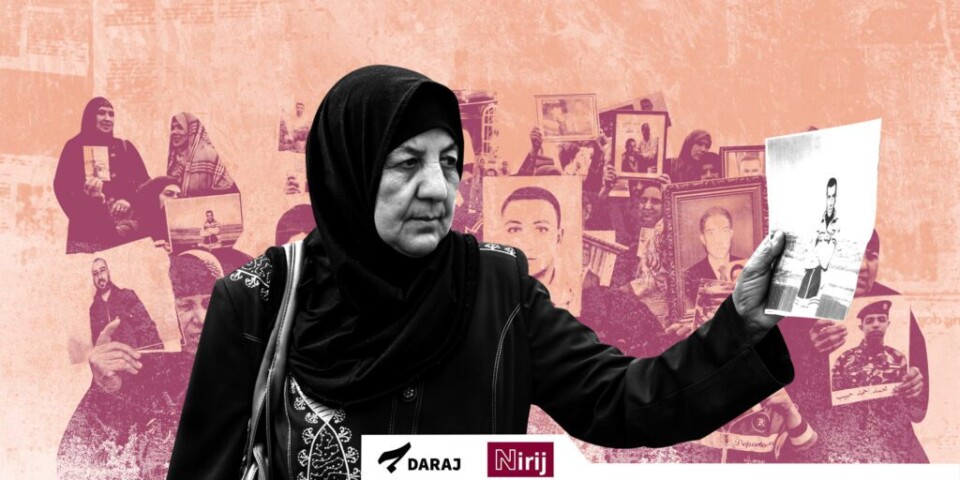
She resisted them with all her might, as they kicked her and hit her with the butt of their guns trying to force her into the car. Her mother held on to her hand and tried to drag her away, while screaming for help. But no one reacted. Fear ruled Mosul at the time.
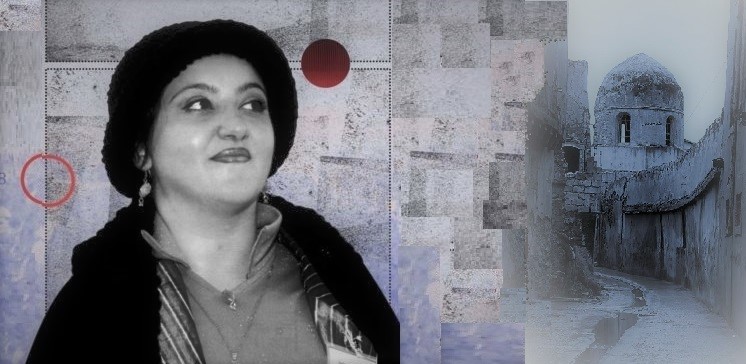
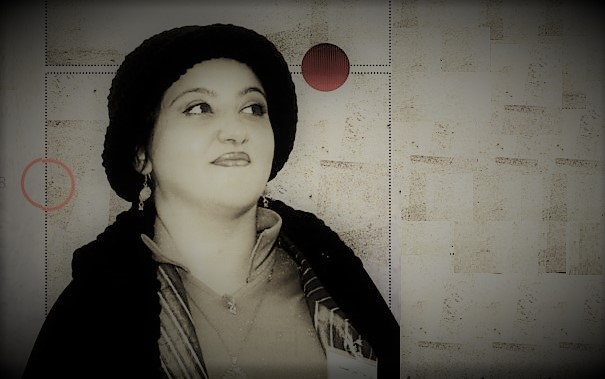
The incident took place on May 4, 2008, in the heart of the city. It was the day young journalist Sarwa Abdel-Wahab joined the long list of journalists killed in Nineveh Governate in the north of Iraq.
“We resisted them for about 15 minutes, but no one came to our rescue,” said Sarwa’s mother, stretching out her arms as if to embrace her dead daughter’s ghost. “In the end, as they were unable to force her into the car, they opened fire. She fell into my arms. She left me and this lonely world behind. But in my soul she remains until the last day of my life.”
Umm Sarwa remembers the day well. Summer was coming. Armed groups had consolidated their presence in the city, becoming de facto rulers. They hung their statements, decisions and instructions in markets and mosques, and even in some government departments.
Some excommunicated segments of society. Others threatened to kill officials working for the government or international organizations, while the security forces just watched and, at times, even coordinated with the killers.
One group specifically targeted in Nineveh in those days were writers and journalists who tried to work and convey the facts in an atmosphere polarized by sectarianism and political infighting. Many dozens of them were killed, and the crimes never resolved.
A Fight With the Killers
“Thirteen years have passed, but I remember everything, as if it happened only yesterday,” said Umm Sarwa, swaying her body as if she was reliving the crime. “I screamed for help from the neighbors, but no one moved, even though we all lived in this neighborhood for many years. Everyone knew us.”
“That day I had decided to accompany Sarwa when she went out,” she continued. “I was afraid. A stranger had knocked on our door two days earlier, saying he was with the police and that people in a white car were watching our house. I didn’t know that this was to be the last day of Sarwa’s life and that I would witness her murder with my own eyes.”
They left their home in the Bakr neighborhood and crossed the alley near the main street. Two people in a white car were waiting. One of them carried a gun. The moment they spotted Sarwa, they got out of the car, attacked her and tried to force her into the car. Speaking with the accent of southern Mosul, they threatened to kill her if she did not get into the car.
“I will never forget their features,” said Umm Sarwa. “The first was of medium height and appeared to be in his forties. He had bright red hair and a white face. He wore a pale gray shirt and pants. The second was a frail young man, with a tanned face and a long, hooked nose. He wore a hat covering half his face, and black, shabby, dusty clothes.”
Sarwa resisted with one foot on the car, while her screaming mother held one of her hands and tried to pull her away, before the redhead attacker dragged her into the sewer and punched her. Meanwhile, the guy with the hat continued to try to push Sarwa into the vehicle. In vain. Then he drew his gun …
Umm Sarwa believes that by then at least ten minutes had passed. “Several times I managed to get away from the redhead but each time the man with the hat kicked me back,” she said. “The last time, I fell hard on the ground. And at that moment, he shot my daughter. She fell next to me. I screamed for him to stop shooting, but he continued.”
A Series of Assassinations
Following the 2003 American invasion of Iraq, armed Sunni groups led the struggle against the American occupation and the newly installed Iraqi government. Nineveh Governate became a hotbed for the liquidation of writers and journalists, as well as politicians, public officials and tribal leaders.
It started with the assassination of journalist Ahmed Shawkat, founder of the weekly Bela Etajah (No Directions) on November 28, 2003. Many others would follow.
On September 16, 2005, the clock indicated ten at night when 36-year-old Firas Al-Ma’adidi, a journalist for the Al-Safir newspaper, entered the alley of his house in Mosul’s Al-Nour neighborhood. Armed men greeted him with a spray of bullets and killed him instantly.
“For a few minutes, they turned the area into a battleground, as if they were fighting a well-armed army, not just a journalist with only his pen,” said Ma’adidi’s wife Ban Al-Obeidi. They had only been married for twenty days. “They had no reason to kill him other than him being a journalist writing words they didn’t like. And so they issued a fatwa to kill him.”
After her husband’s death, Obeidi formed the association to protect and defend the rights of journalists. According to her, many journalists were killed following fatwas issued by armed jihadist groups.
“The killers carried out the liquidation orders with their faces exposed, so they were not afraid of any legal or tribal prosecution,” Obeidi said sharply.
Two days before her husband’s killing, the security forces had found the body of his 28-year-old Al Safir colleague Hind Ismail on the outskirts of the city. She had a gunshot wound close her heart.
There were many more. All the killings that took place during the reign of the Islamist armed groups were registered by the authorities as committed by unknown people and the files were closed, even though in a number of cases the perpetrators were known.
Even after these groups lost their strength, and ISIS was removed from the scene, no party ever moved to reopen these files. The victims’ families also never received the compensation they were due.
The World’s Most Dangerous
For about a decade following the American invasion in April 2003, Iraq ranked as the world’s most dangerous country for journalists. Some 490 were killed at the hands of numerous parties varying from Takfiri groups and state militias to security forces, the army and American occupation forces, according to statistics from international organizations and the Iraqi Journalists Syndicate.
Between 2003 and 2017, journalistic work in Mosul was more dangerous than a combat mission by the security forces or army. Journalists were targeted from all sides and faced not only weapons but also pressure from public officials and malicious lawsuits filed against them.
Still, despite the terrifying atmosphere, dozens of newspapers, websites, radio and television channels appeared in various regions of the country, including Mosul. This coincided with the government easing rules and restrictions regarding media censorship, which encouraged hundreds of young people to get involved.
With the international community’s interest in Iraq, due to the American occupation, many young people found in journalism an opportunity to secure a livelihood for their families in a country characterized by poverty and unemployment, which had just emerged from an era of harsh international sanctions and a devastating war.
Sarwa
Born in Mosul in a family with deep roots in the city, Sarwa Abdel-Wahab graduated from law school, but found that journalism would enable her to express herself, and provide her family with an income.
Sarwa, a girl with a round face, modestly dressed, yet not wearing a headscarf, was well educated thanks to the support of her family, who, like most traditional Mosul families, were keen for its daughters to get a degree.
“Sarwa was very social, friendly and loved to communicate,” said “Dr. M,” who worked with her for four years and knew her closely, yet requested to remain anonymous. “She got into the mine field of the media, because it was the only work available to her at that time. The economy was bad, and legal work was impossible because nearly all courts were suspended.”
“But she was attached to her work and loved it,” he added. “So she did not leave, when journalists were threatened and attacked, and she refused to leave the city, as many other did.”
“I do not recall her ever adopting a discourse supporting, or opposing, a specific party,” he continued. “She was impartial in her reporting. With the danger facing all journalists, many avoided expressing their opinions and positions.”
“But in the end that did not prevent her from being killed,” he said. “I do not think that she was killed because of a specific situation. The goal was to spread terror and silence any voice that criticized violence. The goal was to force everyone to pledge allegiance and be obedient. Or to leave the city.”
“A Profession of Death”
In the course of about a decade, Nineveh witnessed the assassination of 82 journalists or media employees, not including the ones that disappeared at the hands of ISIS. This represented about 20 percent of all such killings in Iraq, and made Mosul the world’s most dangerous place for journalists to work. “A profession of death,” said 45-year-old journalist Ali Omar. “I do not know how we kept working amidst such a torrent of dangers. Booby traps filled the streets, but you had to go near the scene of an event. Fatwas calling for murder were chasing us, and lists of wanted men kept coming in. Just staying in the city was a huge risk. Many of our comrades were falling, and we wondered when it would be our turn.”
“Some of our colleagues’ bodies were left on sidewalks and streets for hours out of fear they might be booby-trapped” said Omar. “They would use them in an ambush, detonate them when the security forces approached.”
The armed groups seemed to prefer the killing of journalists, because it would produce a lot of media coverage. Lists of journalists “whose heads are wanted” were hung at the doors of Mosul’s mosques and one after the other fell often in broad daylight under the eyes of the security forces.
Complicit Security Agencies
“The security services were not only unable to protect the journalists whose names were on the liquidation lists,” said journalist Jamal Al-Badrani. “They were also unable to arrest the accused, even if they knew who they were. They were content to write down the simple data regarding the incident.
They never even investigated the people who were publishing the fatwas and hanging death lists in the mosques.”
“One of the lists targeting journalists published in Mosul was an exact copy from a list of journalists attending a conference in Nineveh Governorate,” said a journalist who preferred to remain anonymous. “Within no time three people on the list were assassinated. Was it not possible to conduct an investigation into how the list was leaked to reveal the perpetrators?”
Seeing the assassinations and prevailing state of terror, many journalists were forced to flee Mosul, losing their jobs and their families’ livelihoods. Others significantly reduced their activities or started working under pseudonyms. However, as soon as their names were leaked, they could be targeted.
Journalist Nawzat Shamdin left Mosul in March 2014 and ended up as a refugee in Norway. He had been the target of three liquidation attempts, the last of which in February 2014.
According to him, local and foreign media alike were in “severe denial” regarding the dead and abandoned displaced journalists. He furthermore accused local and national authorities of abandoning the victims’ families.
“The security services did not bother to investigate,” he said. “After every assassination, investigations were conducted on paper only. And most of the crimes committed against journalists and media professionals were registered as ‘perpetrated by unknown persons,’ while in fact they are unknown persons known to everyone.”
The Great Unknown
Despite the danger, journalists in Mosul did not get much support from local and international organizations.
“They were easy targets for armed groups, security and occupation forces, as well as assassination squads affiliated with certain political parties,” said journalist Ziad Al-Sanjari, who was forced to emigrate to Europe, after receiving death threats due to his work as a Mosul correspondent for an international news agency.
Sanjari asserted that journalists working for international organizations were easily hunted down with ready-made charges, especially since the security services did not play any role in protecting journalists.
“The killers easily escaped punishment, despite the fact that some of them were well-known,” he said. “There have been no real investigations. All cases of assassinated journalists were closed after a routine procedure. I do not remember anyone ever being arrested.”
“Most cases did not include any real investigation, not even a proper inspection of the scene of the incident or asking the victims’ families about details such as whether the journalist had been threatened by specific people,” said Lawyer Salam al-Sawaf, who has dealt with a number of assassination cases. “The investigation files were nothing but ink on paper.”
“All cases were closed the same way,” he added. “The complex procedures even pushed the victims’ families to register the cases as ‘against unknown persons’ even if the perpetrators were known, for accusing someone would keep the case open, which means that no legal procedure can be completed, including retirement or compensation, not even obtaining a death certificate.”
This was confirmed by Colonel Mazen Al-Ahmad, Nineveh Police Media Director: “All cases of targeting and assassinating journalists in Nineveh until 2014 were registered against unknown persons – no criminals were ever identified.”
Read Also
Meeting the Killer
Seeing the lack of serious investigation into the assassinations, and the absence of a strong party to turn to, the victim’s families were often forced to accept the crime as a fait accompli. This is what prompted Umm Sarwa to remain silent and not report her daughter’s murderer, whom she encountered shortly after the assassination.
“When I saw him on the bus, I recognized him immediately,” she said. “I felt a burning sensation in my heart that almost made me attack him. I wanted to scream. But I quickly retreated, because it would endanger the life of my only son left.”
“I will never forget those minutes,” she sighed. “I saw him in front of me and couldn’t do anything. On the contrary, I turned a blind eye and hid my heartbreak.”
Umm Sarwa did not inform the police. Her family said she “did the right thing” seeing the lack of a investigation and the weak implementation of the law.
“How were we to prove he was the murderer,” said Sarwa’s brother Mohamad. “There is no evidence and the police are not interested in searching for evidence.”
“After the incident, her body remained on the spot for about two hours, and the security forces never came,” he said. “After two hours an ambulance arrived to take her to the forensic medicine department. Yet, the investigation did not focus on how she was killed. The questions were about her name, work, and profession. When we said ‘journalist,’ one police officer said without hesitation or shame: ‘How did you let your daughter work in the media? What did you expect?”
“How can I be reassured about my son’s life, and mine, when the security services blamed me for my daughter’s work, and considered her work as something that deserves to be killed?” Umm Sarwa asked.
Being Filmed If Sarwa’s mother sensed an indirect danger that forced her to remain silent, the danger was of a very direct nature for Maadidi’s wife Ban Al-Obeidi, as she was forced to drop the case against the suspect of her husband’s assassination.
“The security forces had arrested a person named Ammar Howaid, and he confessed to killing a large number of people, including my husband,” she said. “I went to court under police protection, yet when I was there recording my statement with the investigative judge, someone was filming me with a mobile phone.”
“I screamed,” she said. “What is happening? I do not want to give up the lawsuit! Then the judicial investigator told me in a low voice: ‘The one who is filming you is the accused’s brother, and if you don’t compromise, he will target you and your family, and no one can protect you from their brutality. Hear my advice, and my complacency, because he will be executed anyway, for he has been accused in other cases.”
Fearing persecution, Obaidi relinquished her right and that of her husband. “Doing that was like drinking a cup of poison,” she said. “But when the terrorist’s brother is filming inside the court without fear, how can I escape the tyranny?”
Victims Without Rights
The 2011 Journalist Protection Law states that “the heirs of every (non-employee) journalist who is martyred while doing his duty, or because of it, shall be granted a pension worth 750,000 dinars per month.”
However, according to the families of ten journalists killed in Mosul, most victims’ families in Mosul never got anything. Sarwa’s family is one of them. It did not receive any compensation or pension other than what was disbursed by the provincial council on the grounds that she was a victim of terrorism. The same is the case for Obeidi.
“The families of the victims did not see any of their rights acknowledged,” the latter said. “They did not even get the pension they are entitled to under the Journalist Protection Law.”
Journalists who were directly targeted because of their work were treated as victims of terrorism, depriving them of their rights. Many of the victims’ families blame the Journalists Syndicate. “It did not do its duty, so we had to accept they were victims of terrorism, accidentally killed in an explosion or armed confrontation.”
The Union
Many of Nineveh’s journalists and media professionals were never a member of the Journalists Syndicate, which has 20,000 members.
“Many journalists did never obtained membership, while it was granted to people who do not actually work in the field of journalism or who work as technicians, drivers, or even couriers in media institutions,” said journalist Ziad Al-Sanjari. “It also granted membership to people working in media affiliated with parties or militias.”
“The union has turned into a formal institution that works for private goals,” he said. “How can it defend journalists who expose corruption and human rights violations?”
“My father was a member of the administrative body of the Journalists Syndicate and despite that, we did not get anything after his martyrdom,” said Yasser Abdel-Khaleq Nasser, whose father was killed by an explosive device on September 27, 2007. “All we got is retirement money. A martyr of terrorism.
The Journalists Syndicate not doing its job, was the main reason for Ban Al-Obaidi to establish Defending Journalists Rights association in order to collect the files of victims in Nineveh and to fight for their rights.
However, Sana al-Naqash, head of the Martyrs and Wounded Department, denies any negligence on the part of the Journalists Syndicate, and says that there is a certain ambiguity in the matter.
According to her, the Journalists Protection Law was issued before the Law on Compensation for Victims of Terrorism which specified a bigger pension. “We worked to make all ‘press victims’ to ‘victims of terrorism’ so that the families would receive the highest amount.”
“Approximately 90 percent of the press victims receive a pension,” Naqash claimed. “And the Syndicate is making every effort to compensate their families.”
“The situation in Mosul is different from other cities, especially with regard to journalist victims after 2014,” she admitted. “Because their files need a security check and this takes a long time due to the large number of deaths and assassinations in Mosul, which recorded the highest death after Baghdad.”
Migration or Death
The violence against Iraqi bloggers and journalists since has not stopped and again escalated following the popular protests that started in October 2019 and lasted for about a year. Entire institutions were burnt down in broad daylight without the security interfering. No one was held accountable, even though cameras had recorded faces and several statements showed an affiliation with well-known militias.
As the targeting of journalists widened, hundreds of them were forced to move, while dozens left the country.
“I left Mosul after the organization for which I used to work was threatened,” said a journalist, who wished not to be named for fear of persecution. “Then its headquarters in Baghdad were targeted too. Now I am thinking of leaving Iraq for good. There is no other way to guarantee our lives.”
“The scene has not changed much from what it was a decade ago, when Sarwa, Maadidi and Shawkat were killed, because of their work with the state or for merely communicating with government officials or coalition forces,” he continued. “Today it is enough for someone to accuse you on social media of working for a party, an embassy or a foreign country and your liquidation is justified.”
Mosul, which got rid of the extremist religious groups by 2017, is today under the control of the Popular Mobilization Forces (PMF) or, as some call it, “the heir of ISIS”, as it has imposed itself as a de facto ruler in an arena where the grip of army and police has loosened. As a consequence, the scene of years ago is repeated. “There is no room for any criticism,” journalists claim.
Although no incidents of assault against journalists were recorded, they have receive direct and indirect threats from elements close to or affiliated with the militias whenever they publish material concerning them or their illegal practices.
This is what has prompted many journalists, who had fled Mosul yet returned after ISIS’ defeat, to leave again. Others prefer to work under a pseudonym, having learnt the lessons from the past, most of which were deadly.
This investigation was carried out with the support of the Gulf Center for Human Rights as part of the project to end impunity for crimes committed against journalists in the MENA Region.